
Robotics at NC State
Robotics at the College of Engineering brings together control, AI, human interaction and systems integration from fundamentals to application.
NC State University’s College of Engineering aims to be a national leader in robotics innovation, focusing on AI-enabled, hands-on and collaborative robotics.
Robotics Research Areas
NC State currently has faculty working in robotics across multiple departments. Their work is summarized across core disciplines and research thrusts.
Advanced and Safe Autonomy, Perception and Control for Robotics
Control, Autonomy & Learning
Focused on foundational theories and algorithms for intelligent, safe and adaptive autonomous robots. Includes advanced control algorithms, reinforcement learning, deep learning for control, game theory, multi-agent coordination, cyber-physical security, safe autonomy, and adaptive control and locomotion control for legged and humanoid robots and embodied AI for robots acting as intelligent physical agents.
Sensing & Perception for Robotics
Core technologies enabling robots to understand, interpret and navigate the world. Includes computer vision, multimodal sensing, SLAM, perception for manipulation, acoustic sensing, tactile sensing, sensor fusion, and perception for field environments.
Trustworthy, Safe & Resilient Robotics
Ensuring robots operate reliably, transparently and securely in high-stakes settings. Includes explainable robotics, formal verification, dependable multi-robot systems, adversarial robustness and cybersecurity of robotic platforms and networks. Includes ethical frameworks for responsible robotic decision-making and deployment.
Application-Focused Robotics
Human Health, Interaction & Rehabilitation Robotics
Robotics that augment, restore, or enhance human capability. Includes wearable exoskeletons, soft/hybrid assistive devices, neurorobotics, neuromorphic interfaces, medical robotics, rehabilitation robotics, robotic prosthetics, haptic robotics and physical human robot interaction. includes robots designed for human environments, such as humanoid robots, social robots, and collaborative legged systems built for shared physical spaces.

Field, Agricultural & Environmental Robotics
Robots that operate in natural, outdoor, controlled or unstructured environments. Includes agricultural robotics, livestock monitoring, environmental sensing platforms, field autonomy, resilient locomotion, legged robots and quadrupeds for uneven terrain, and weather-robust aerial/ground systems.
Aerial, Connected & Networked Robotic Systems
Autonomous aerial vehicles and robots that rely on advanced communication networks. Includes UAVs, multi-robot swarms, networked autonomy, V2X/IoBT, collaborative sensing, multi-agent robotics systems and large-scale trajectory planning (e.g., AERPAW).
Robotics for Manufacturing, Automation & Logistics
Robots that support high-precision manufacturing, supply chain efficiency and human-robot collaboration in industrial settings. Includes warehouse automation, last-mile delivery robotics and robotics for advanced manufacturing workflows.
Human-Centered Robotics
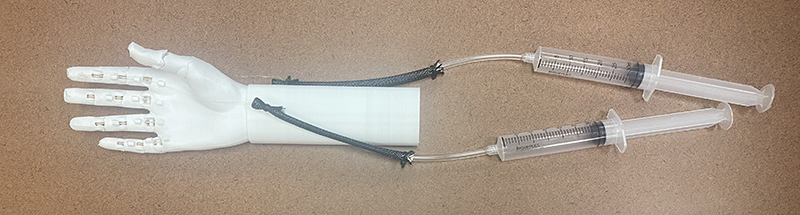
Human-Centered Robotics and Human-Robot Interaction
Robotic systems intentionally designed around human needs, capabilities, and behavior. Includes human-robot interaction (HRI), shared autonomy, human trust, cognitive engineering, ergonomics, robots designed for human environments such as humanoid systems, and collaborative or assistive robots operating in workplaces, homes and public spaces.
Humanoid, Legged & Bio-Inspired Mobility
Focused on robots designed for human-scale interaction and robust mobility. Includes humanoid robots, bipeds, quadrupeds, bio-inspired locomotion, compliant legs, dynamic balancing and high-mobility platforms for human environments and complex terrain.
Education, Materials and Manufacturing for Robotics

Micro, Nano, Soft Robotics
Focused on small-scale perception and actuation, soft interfaces, and new material paradigms. Robots and mechanisms leveraging new materials and mechanically intelligent structures. Includes micro/nanorobots, biologically inspired actuators, ultrasoft polymers, hydrogel actuators, physical AI and soft robotic systems for delicate interaction.
AI-Driven Materials Discovery & Self-Driving Labs
Robotics-enabled autonomous experiments and high-throughput scientific discovery. Includes self-driving labs, AI-orchestrated multi-robot workflows, autonomous synthesis platforms and closed-loop materials optimization.
Robotics Education, Software & Workforce Development
Develops reliable software tools and training programs for future robotics engineers. Includes software engineering for robotics, formal testing and verification, hands-on curriculum development, and statewide robotics workforce pipelines.

Launch Director

Helen Huang
Jackson Family Distinguished Professor
Lampe Joint Department of Biomedical Engineering
Helen Huang, Jackson Family Distinguished Professor in the Lampe Joint Department of Biomedical Engineering at NC State University and UNC-Chapel Hill, is the launch director of the College of Engineering’s Robotics Initiative.
Under Huang’s leadership, the Robotics Initiative will continue its work to guide NC State to becoming a national leader in robotics innovation, focusing on AI-enabled, hands-on and collaborative robotics. With an interdisciplinary team, she will drive robotics excellence across research, education and innovation; strengthen interdisciplinary collaborations; and guide the strategic growth of robotics in our college and at NC State. Since its launch in 2025, the initiative has connected NC State faculty who are advancing robotics in both cutting-edge research as well as key applications, including rehabilitation, agriculture, and accelerating research and manufacturing.
Huang is the director of the Closed-Loop Engineering for Advanced Rehabilitation (CLEAR) Core. An accomplished researcher in the field of rehabilitation robotics and human-robot interaction, her primary research goal is to create breakthroughs in human-machine symbiotic (HMS) systems that empower people with physical disabilities to lead more active and productive lives. Using AI and neural interfaces, she is working to transform robotic prosthetics into seamless extensions of the human body.
She is a Fellow of the Institute of Electrical and Electronics Engineers (IEEE) and the American Institute for Medical and Biological Engineering (AIMBE). She holds a joint faculty appointment in the Department of Electrical and Computer Engineering and the Department of Mechanical and Aerospace Engineering.
Participating Faculty

- Biomedical Engineering (BME)
- Nitin Sharma
- Derek Kemper
- Helen Huang
- Amol Yadav
- Civil, Construction, and Environmental Engineering (CCEE)
- Kevin Han
- Ali Hajbabaei
- Electrical and Computer Engineering (ECE)
- Max Cohen
- Sevgi Gurbuz
- Edgar Lobaton
- Mihail Sicitiu
- Aranya Chakrabortty
- Ismail Guvenc
- Aritra Mitra
- Mechanical and Aerospace Engineering (MAE)
- Jaemin Lee
- Intelligent humanoid and animaloid robots
- Jie Yin
- Soft robotics
- Katherine Saul
- Wearable and rehabilitation robotics
- Donggun Lee
- Controls and Automation
- Andre Mazzoleni
- Autonomous robotic vehicles for use in challenging and hazardous terrains
- Yong Zhu
- Soft sensors and soft robotics
- Gregory Buckner
- Surgical robotics and robotics for medical applications
- Fen Wu
- Control theory and autonomous systems
- Zhiyu Huang
- Physical AI and robot learning
- Cheryl Xu
- Robotics, automation, and intelligent manufacturing
- Darius Carter
- Unmanned Aerial Vehicle (UAS) aerodynamics
- Xusheng Luo
- Trustworthy robot decision-making
- Jaemin Lee
- Computer Science (CSC)
- Industrial and Systems Engineering (ISE)
- HUMAN SYSTEMS AND ERGONOMICS, especially humans interacting with technologies
- Karen Chen
- Human systems and ergonomics
- Renran Tian
- Human systems and ergonomics
- Xu Xu
- Human systems and ergonomics
- Karen Chen
- MANUFACTURING, AUTOMATION AND ROBOTICS
- Jingyan Dong
- Nano manufacturing; has been one of our teachers of automation
- Ola Harrysson
- Advanced manufacturing, some of which involves automation and robotics
- Yuan-Shin Lee
- Manufacturing processes; has been one of our teachers of automation
- Fred Livingston
- Robotics, automation and manufacturing; currently our lead instructor for robotics and automation
- Jingyan Dong
- LOGISTICS AND CONNECTIONS WITH ROBOTICS
- Leila Hajibabai
- Logistics including last-mile where robots may be involved
- Michael Kay
- Logistics and material handling; warehouse material handling involves robotics
- Leila Hajibabai
- HUMAN SYSTEMS AND ERGONOMICS, especially humans interacting with technologies
- Materials Science and Engineering (MSE)
- Chemical and Biomolecular Engineering (CBE)
- Milad Abolhasani
- Lilian Hsiao
- Orlin Velev
- Richard Spontak
- Wentao Tang


